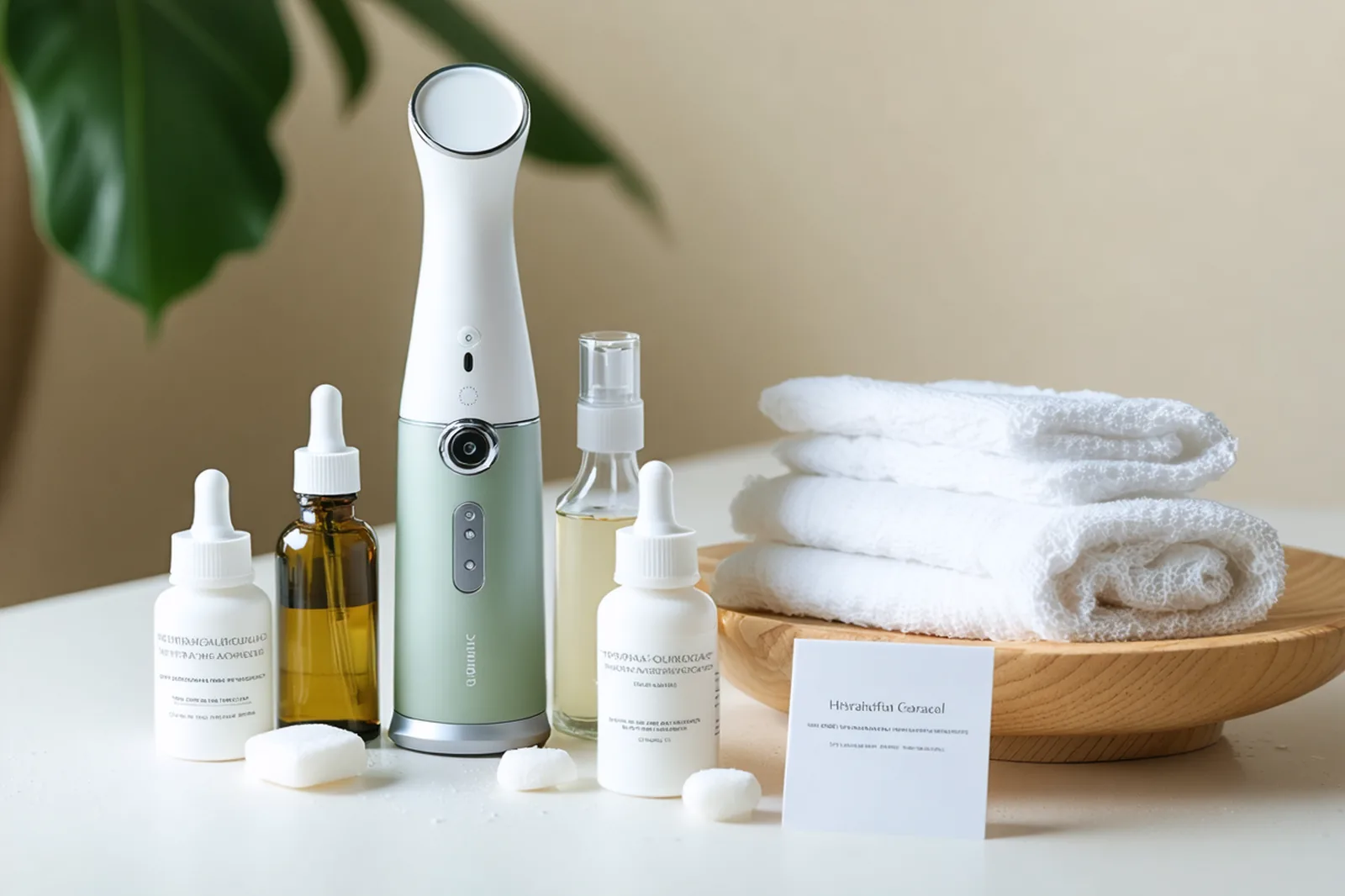
HydraFacial and a traditional manual or chemical facial operate on fundamentally different mechanisms. A regular facial—whether hydrating, chemical-peel, or microdermabrasion-based—relies on topical products, manual extraction, and surface exfoliation to cleanse and improve skin texture. HydraFacial uses vortex-fusion technology, a closed-loop vacuum system that combines suction, hydradermabrasion (a gentler alternative to mechanical microdermabrasion), and simultaneous infusion of proprietary serums into the epidermis. The device applies negative pressure to dislodge debris and dead skin while delivering hyaluronic acid, antioxidants, or peptides directly into the skin in real time. This is not a topical application—it's mechanical extraction paired with transepidermal infusion, which is why HydraFacial can claim faster, more visible results and why the clinical data shows measurable hydration and clarity improvements within a single session.
Devices & Tech
HydraFacial vs. Regular Facial: Clinical Mechanism, Economics, and Menu Positioning for Medspa Owners
HydraFacial's patented vortex-fusion technology and proprietary serums command premium pricing and higher margins than traditional facials—but the business case depends on patient volume and your existing equipment footprint.